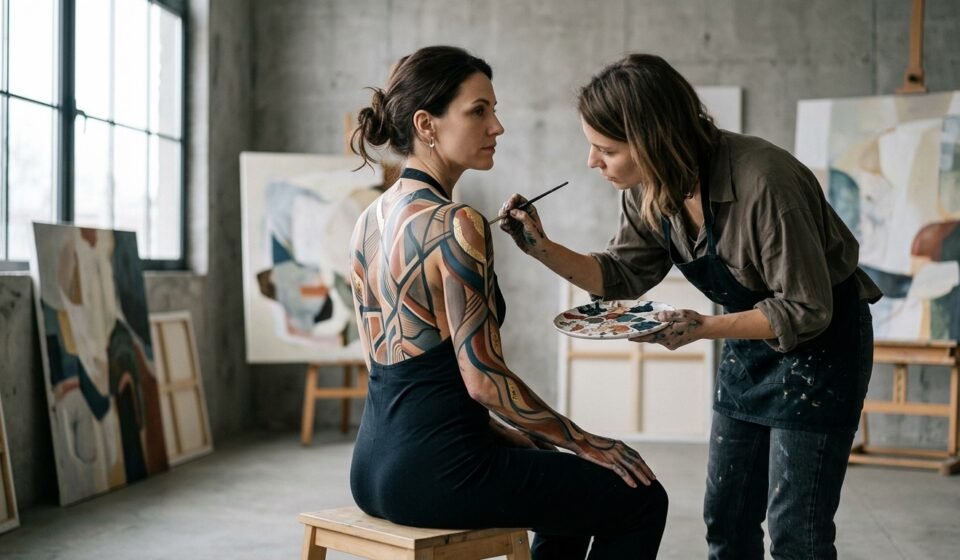

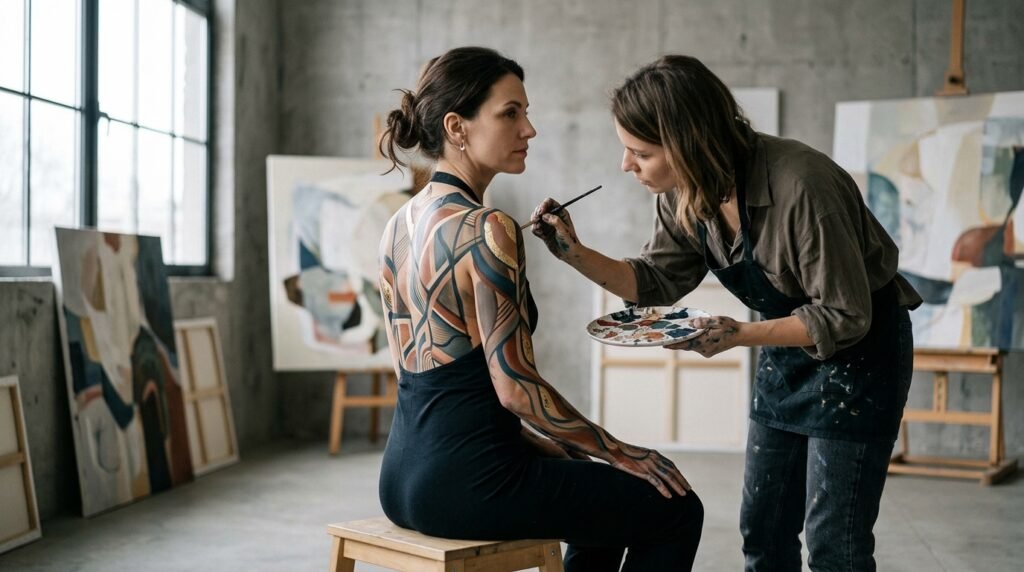
When paint moves from a traditional canvas onto the human body, the artwork becomes something very different. It has shape, movement, texture, and a temporary sense of life. Nude body painting is one expression of this concept, combining painting with performance, photography, modeling, and contemporary art.
The word “nude” can make the subject sound primarily provocative, but body painting has a much broader artistic context. The human body can function as a three-dimensional canvas, while the finished design may transform the model into an abstract figure, animal, landscape, character, or visual illusion. Academic research describes body painting as an art form built around a “three-dimensional living canvas,” emphasizing how the painted body can become part of the artwork rather than simply displaying it.
At the same time, professional body painting requires clear boundaries. Consent, appropriate materials, photography permissions, model comfort, and respect for the person being painted are important parts of the process.
What Is Nude Body Painting?
Nude body painting generally refers to artistic painting performed on an unclothed human model. However, the practical meaning varies between studios, photography projects, performances, festivals, and private sessions.
In professional environments, complete nudity is not necessarily required. Models may use modesty coverings while large areas of the body remain available for painting. For example, published body-painting guidance from competitions commonly establishes specific rules about what must remain covered, while some professional services use underwear or other coverings during live performances.
The central artistic idea is not simply the absence of clothing. It is the transformation of the body into a surface that can carry color, patterns, optical effects, and visual storytelling.
Unlike permanent tattoos, traditional body painting is temporary. Depending on the products and circumstances, the artwork may remain for hours or a relatively short period before being removed. This temporary quality is one reason body painting works especially well for live art, festivals, photography, stage performances, and special events.
A Short History of Body Painting
Body decoration is much older than modern professional body-painting festivals. Across different cultures, pigments and designs have been applied to the body for ceremonies, social identification, religious practices, celebrations, and other purposes.
OpenStax notes that full-body painting has long been practiced by Indigenous Australian peoples, with designs sometimes communicating group identity, social position, family relationships, or other culturally important information.
Historical body-painting traditions also appear in parts of Africa, Oceania, and other regions. Encyclopedia.com describes how African societies used body painting for social and religious purposes, while colors and patterns could carry meanings that differed significantly between communities.
Modern fine-art body painting developed along a different path. One important reference point is French artist Yves Klein’s Anthropometries from 1960. The Museum of Modern Art explains that Klein used models covered in his trademark blue paint as “living paintbrushes,” creating impressions of their bodies on paper as part of staged performances.
These historical and artistic developments helped establish an idea that remains central today: the body can be both the subject of an artwork and a medium through which the artwork is created.
How Body Painting Turns a Person Into a Canvas
A traditional canvas remains flat and relatively predictable. A human body is curved, moving, and constantly changing depending on posture and lighting.
Artists therefore have to think about anatomy as part of composition. A line placed across the shoulder may look different when the arm moves. A pattern running from the torso toward the leg can create a visual connection that disappears when the model changes position.
Research published in the HAU: Journal of Ethnographic Theory describes this transformation as an important feature of body art: the model’s body becomes something different through the creative process, and photography can then further transform that three-dimensional artwork into a two-dimensional image.
This is why strong body painting is more than simply covering skin with attractive colors. The artist has to consider the body’s natural contours, movement, shadows, perspective, and relationship with the surrounding environment.
Popular Styles and Creative Approaches
There is no single visual style that defines nude body painting. Artists can take the concept in very different directions.
Abstract body painting uses shapes, lines, textures, and color relationships without necessarily attempting to reproduce recognizable objects. The body’s curves become part of the composition.
Camouflage painting takes another approach. The goal is to make a painted model visually blend with an environment, object, pattern, or background. The World Bodypainting Festival has an established camouflage category, demonstrating how illusion and environmental integration have become recognized parts of competitive body art.
Fantasy and character-based designs can transform the model into an imaginative creature or figure. Nature-inspired work may incorporate flowers, leaves, animals, landscapes, or organic patterns.
Fine-art body painting can also focus on the human form itself. In this approach, the paint may emphasize anatomy, geometry, texture, symbolism, or the relationship between identity and physical appearance.
Performance art adds another layer. The model does not simply stand still as a finished canvas. Movement, pose, music, staging, lighting, and audience interaction can all become part of the artwork. Contemporary artists such as Trina Merry have presented body-painted performers in museum, gallery, and public-art contexts.
Why the Model Matters as Much as the Artist
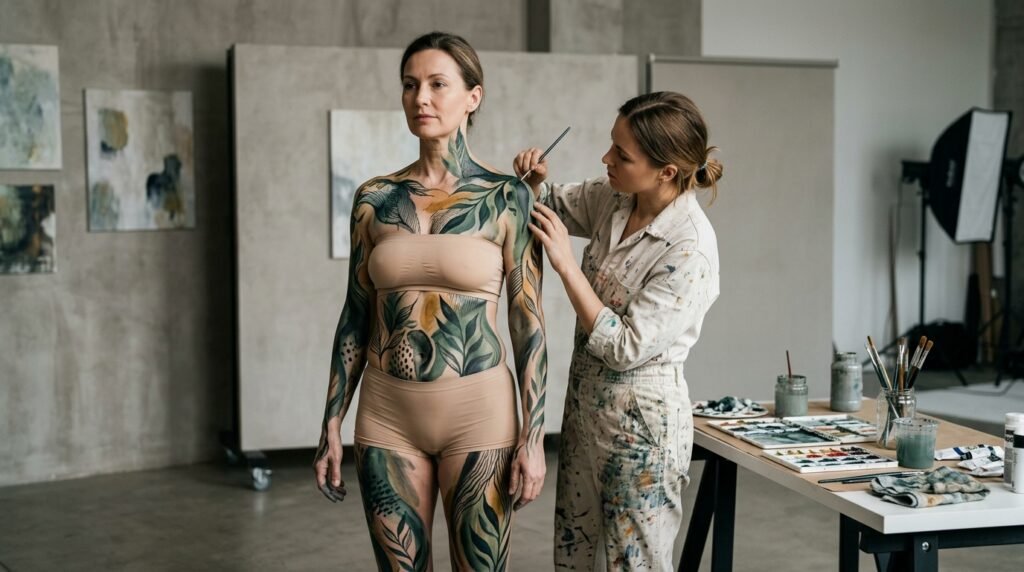
One of the most important aspects of body painting is collaboration.
The artist controls the design and technical process, but the model provides the three-dimensional surface, physical presence, movement, and performance. The result can therefore be considered a collaboration rather than a painting made on an inanimate object.
This relationship becomes particularly important where nudity is involved. Consent should be clear before painting begins, and the model should understand what areas will be painted, whether photographs will be taken, where those images may appear, and whether the project will be public or private.
The World Bodypainting Festival requires artist-model agreements for its competition participants and states that bodypainting-category participants must be at least 18. Its agreement also addresses the creation and further use of photographs and video.
Other body-painting organizations similarly emphasize adult participation, consent, and cooperation. BODYPAINTING POLAND, for example, describes its model program as a collaboration between artists and models and limits participation to people aged 18 or older.
Safety and Skin Care
Professional body painting should never treat the skin as if it were ordinary paper or fabric.
Paint products should be intended for skin use and applied according to the manufacturer’s instructions. Artists also need to consider individual sensitivities, cleanliness, product storage, and the possibility of irritation.
The U.S. Food and Drug Administration explains that cosmetic companies and individuals marketing cosmetic products are responsible for their products’ safety and that cosmetics can become harmful when contaminated with microorganisms. The FDA also recommends basic hygiene practices such as keeping containers clean and avoiding practices that introduce contamination.
The issue is particularly relevant when products are used over large areas of skin. A product described casually as “paint” should not automatically be assumed to be suitable for human skin.
Body-painting competition guidance can also include practical considerations for models. World Bodypainting Festival rules have instructed artists to use body-painting colors on the body and to consider the model’s comfort, including food, water, and bathroom access during competitions.
Good preparation therefore includes clean skin, appropriate products, sensible working conditions, and communication throughout the session.
Nude Does Not Automatically Mean Sexual
One of the most important distinctions in this subject is the difference between nudity and sexuality.
Nudity can appear in fine art, life drawing, sculpture, photography, theater, performance art, and body painting without the central purpose being sexual. Human Connection Arts, an organization associated with public body-painting events, explicitly discusses the distinction between nudity and sexuality and treats the human body as an artistic medium within public performance.
That distinction also matters when finished images are published online. A professional project should make its intended use clear from the beginning. A model agreeing to be painted does not automatically mean they have agreed to every possible photographic, promotional, commercial, or archival use of the resulting images.
Festival policies can be quite specific about this. World Bodypainting Festival terms state that commercial use of event photographs requires express written consent from relevant parties and prohibit use of festival recordings in pornographic or degrading contexts.
Body Painting in Contemporary Festivals
Modern body painting has grown into an international competitive and performance-art community.
The World Bodypainting Festival, founded in 1998, has played a major role in developing organized body-painting competitions. Its official history records the first festival in Austria and the later development of championship competitions.
The organization has continued evolving its format. In 2026, the festival operated as a multi-destination series rather than relying exclusively on one traditional location. Events included WBF Spain, WBF Italy, WBF Finland, and online awards covering categories such as Bodypainting Classic and Open Techniques.
The 2026 WBF Spain event in Águilas included a Bodypainting & Show championship, while the Italy edition in Sterzing/Vipiteno focused on Camouflage Bodypainting and Facepainting.
These events show how the discipline has expanded beyond simple decorative painting. Competition categories can reward technical skill, originality, visual storytelling, presentation, camouflage, stage performance, and creative interpretation.
Nude Body Painting and Photography
Photography is closely connected to body painting because the finished work is temporary.
A photograph can preserve a design that may disappear after the model showers or the paint is removed. In that sense, the photograph becomes a record of an artwork that existed for only a limited period.
Lighting is especially important. Shadows can reveal or hide painted details, while colored lighting can dramatically alter the appearance of pigments. The photographer also has to consider composition and perspective so that the body painting remains the visual focus.
Academic discussion of body art has highlighted this transition from living body to photographic image, noting that the act of photographing the painted model can create another layer of artistic transformation.
For nude projects, privacy and image rights become even more significant. Agreements should clearly specify whether images can be published, where they can appear, and whether they can be reused commercially.
Common Questions About Nude Body Painting
Is nude body painting always completely nude?
No. The term may describe painting on an unclothed model, but professional and public projects often use coverings for sensitive areas. The exact arrangement depends on the artwork, event, photographer, model, and applicable rules.
Is body painting permanent?
No. Conventional body paint is generally temporary and is designed to be removed after the artistic session or performance.
Can body painting be considered fine art?
Yes. Academic research, museum collections, contemporary performance projects, and international competitions all demonstrate that body painting can function as a serious artistic medium. Yves Klein’s Anthropometries provides a historically important example of the body being incorporated directly into the creation of an artwork.
What should a model discuss before a nude body-painting session?
The model and artist should establish boundaries, areas to be painted, coverings, photography, image rights, expected working conditions, and how the finished material may be used. Formal agreements are particularly useful for professional or public projects.
What makes body painting different from ordinary painting?
The canvas moves, has three-dimensional contours, reacts to lighting, and can become a performer within the finished artwork. That combination makes body painting both a visual and physical art form.
The Lasting Appeal of a Temporary Art Form
Nude body painting occupies an unusual space between traditional painting, performance, photography, fashion, and body art. Its strongest appeal comes from the fact that the artwork is temporary but the creative possibilities are remarkably broad.
The model can become part of an illusion, a moving sculpture, a photographic composition, or a performance. Artists can use anatomy, color, perspective, and environment in ways that would not be possible on a flat canvas.
At the same time, professional practice depends on more than artistic ability. Respect for the model, informed consent, appropriate materials, hygiene, privacy, and responsible image use are fundamental parts of the process.
As contemporary festivals and artists continue experimenting with body-based art, body painting remains a distinctive example of how the human form can move from being merely the subject of art to becoming the canvas, medium, and performer within the artwork itself.