

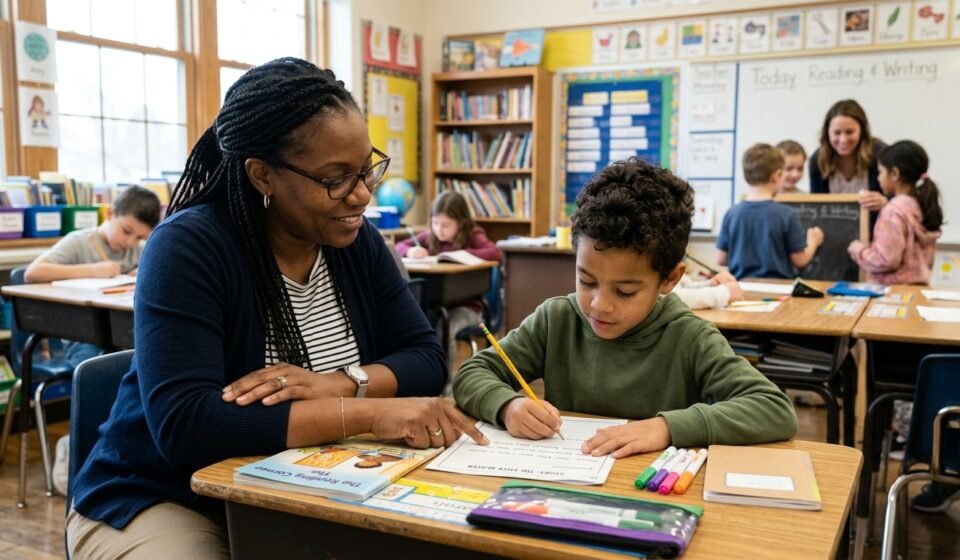

A school is more than a place where teachers deliver lessons. Behind a successful classroom is a team of people who help students understand new concepts, stay organized, develop essential skills, and overcome learning challenges. One important member of that team is a paraprofessional, an education support professional who assists teachers and students throughout the school day.
Paraprofessionals play a valuable role in modern education, particularly in classrooms where students need additional academic, behavioral, language, or personal support. Although they work closely with teachers, their responsibilities differ from those of licensed classroom educators.
Whether you are exploring an education career, researching a school position, or trying to understand the terminology, learning about this role can help you make informed decisions. This guide explains what a paraprofessional is, what the job involves, the qualifications that may be required, typical earnings, and opportunities for career advancement.
What Is a Paraprofessional?
A paraprofessional is a trained support worker who assists a qualified professional with specific responsibilities. In education, the term generally refers to someone who works alongside a teacher to support instruction, classroom activities, and individual student needs.
Paraprofessionals are also known as paraeducators, teacher aides, instructional assistants, educational assistants, or teacher assistants. Although schools may use these titles interchangeably, the precise job description depends on the employer and location. The U.S. Bureau of Labor Statistics includes paraprofessionals among the alternative titles used for teacher assistants.
Bureau of Labor Statistics
Unlike a licensed teacher, a paraprofessional usually does not have primary responsibility for designing and delivering the entire instructional program. Instead, the paraprofessional works under a teacher’s direction and helps students participate in classroom learning.
These professionals may work in elementary schools, middle schools, high schools, early childhood programs, and specialized educational settings. Some help an entire classroom, while others provide one-on-one assistance to a particular student.
The central purpose of the role is to make learning more accessible while allowing teachers to manage instruction effectively.
What Does a Paraprofessional Do?
The daily responsibilities of a paraprofessional depend on the students they support and the type of school they work in. Some positions concentrate on academic assistance, whereas others involve behavior management, language development, or practical support for students with disabilities.
Academic Support
A paraprofessional often reinforces concepts introduced by the classroom teacher. This may involve helping students understand instructions, reviewing reading assignments, practicing mathematics, or completing classroom activities.
For example, a teacher may introduce a new mathematics concept to the whole class before asking students to complete individual exercises. The paraprofessional can then work with a small group that needs additional explanation.
This assistance gives students more opportunities to practice without requiring the teacher to divide attention equally among everyone at once.
Classroom Management
Maintaining an organized learning environment is another important responsibility. Paraprofessionals may help distribute learning materials, supervise students during transitions, reinforce classroom rules, and support group activities.
They may also supervise students during lunch, recess, field trips, or other school activities, depending on the position.
These responsibilities help the classroom operate smoothly and give teachers more time to focus on instruction.
Special Education Assistance
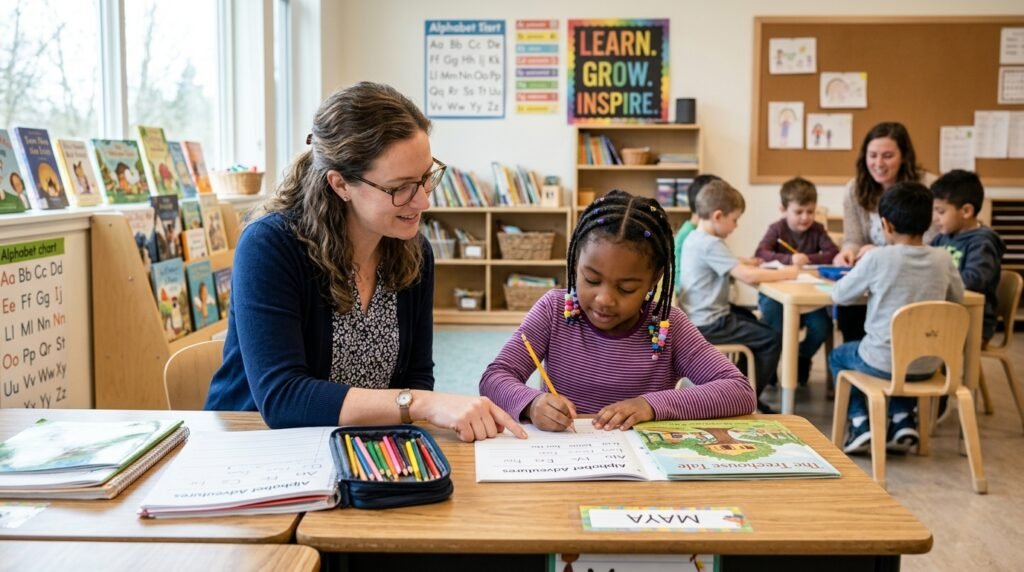
Many paraprofessionals work with students who have disabilities or require individualized educational support. In these settings, responsibilities may include helping students access classroom lessons, communicate their needs, participate in activities, or develop greater independence.
Some paraprofessionals support students whose educational plans identify specific accommodations or services. Others work in specialized classrooms designed to meet particular learning needs.
Depending on their training and assignment, they may also assist with mobility, personal care, or daily routines. Medical-related responsibilities require appropriate training and must follow the school’s policies and applicable rules.
Understood
Behavioral and Social Support
Students sometimes need help managing frustration, following routines, interacting with classmates, or adjusting to changes. A paraprofessional may help implement a behavior support plan developed by the appropriate educational team.
They might record observations, encourage positive behavior, and communicate relevant information to the supervising teacher.
The goal should be to help students participate successfully and develop independence, rather than make them unnecessarily dependent on adult assistance.
Administrative and Organizational Tasks
Some paraprofessionals also assist with classroom preparation and routine administrative work. These tasks may include preparing worksheets, organizing supplies, maintaining records, and helping teachers monitor student progress.
The balance between instructional and administrative responsibilities varies by school. Applicants should therefore review the actual job description instead of assuming that every paraprofessional position involves the same duties.
What Qualifications Does a Paraprofessional Need?
There is no single qualification pathway that applies to every paraprofessional position. Requirements depend on the country, state, school district, employer, funding program, and specific responsibilities of the job.
In the United States, a high school diploma or equivalent is a common starting point. Some positions also require college coursework, an associate degree, a skills assessment, specialized training, or state-issued credentials.
For example, federal Title I qualification rules generally require a high school diploma or its equivalent and additional qualifications, such as completing two years of higher education, earning an associate degree or higher, or demonstrating the required knowledge and instructional assistance skills through a formal state or local assessment. Other state and employer requirements may also apply.
Understood
+1
Texas illustrates why candidates should check local rules. The Texas Education Agency states that individuals must first be employed by a school district and instructed by that district to apply for an Educational Aide certificate. Qualification levels also depend on education, experience, and other applicable criteria.
Texas Education Agency
+1
Before applying, candidates should check whether the vacancy requires:
- A high school diploma, GED, or equivalent qualification.
- College credits or a relevant degree.
- A paraprofessional assessment or other competency test.
- Background checks or fingerprinting.
- First aid, CPR, special education, or other job-specific training.
- Experience working with children or individuals with disabilities.
Reading the official job advertisement and checking the relevant education authority’s requirements are the most reliable ways to determine eligibility.
Essential Skills for a Successful Paraprofessional
Academic qualifications are important, but the ability to work effectively with students is equally valuable. Paraprofessionals interact with children who may have different abilities, communication styles, cultural backgrounds, and learning preferences.
Communication skills help paraprofessionals explain instructions clearly, listen to students, and share relevant observations with teachers.
Patience and empathy are essential when students struggle with a difficult assignment, feel overwhelmed, or need additional time to understand a concept.
Adaptability allows paraprofessionals to adjust their approach when an activity is not working as expected. They must also be comfortable following lesson plans and guidance provided by the supervising educator.
Observation skills help them notice changes in student participation, behavior, or understanding. Accurate observations can provide useful information for teachers.
Teamwork and professionalism are necessary because paraprofessionals work with teachers, administrators, families, and other support professionals. They must also protect confidential student information and follow school policies.
These qualities can help someone become a dependable member of the educational team, regardless of the grade level or classroom setting.
How Much Does a Paraprofessional Earn?
Paraprofessional salaries vary considerably by location, employer, experience, working hours, and job specialization. Public school positions, private schools, and early childhood settings may offer different pay structures and benefits.
For a useful U.S. benchmark, the Bureau of Labor Statistics reported a median annual wage of $36,780 for teacher assistants in May 2025. Workers in the lowest 10 percent of this occupational group earned less than $27,150, while those in the highest 10 percent earned more than $50,040. These are teacher-assistant occupational figures, not a separate nationwide median exclusively for every paraprofessional job title.
Bureau of Labor Statistics
Actual earnings can depend on whether the position is full-time or part-time, whether employment follows the school calendar, and whether the role includes additional responsibilities or specialized qualifications.
Some paraprofessionals do not work during the summer, while others find employment in year-round schools or summer education programs. Consequently, candidates should examine the annual salary, hourly rate, paid working days, benefits, and summer employment arrangements rather than comparing advertised wages alone.
Bureau of Labor Statistics
For the most relevant estimate, consult current salary information and job advertisements from school districts in your intended area.
What Are the Career Opportunities for Paraprofessionals?
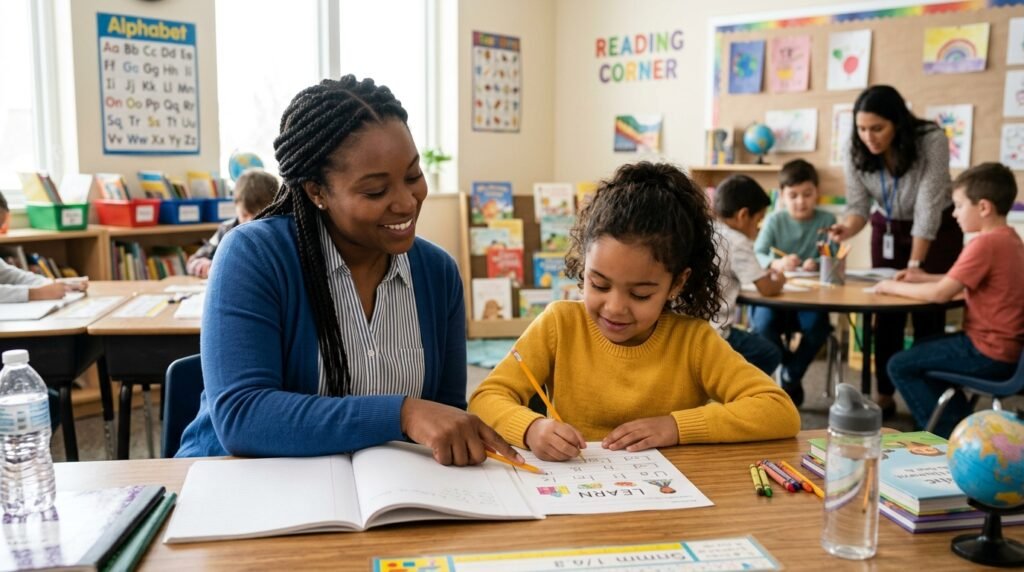
Working as a paraprofessional can provide practical experience in an educational environment. It allows employees to observe teaching methods, understand classroom routines, and learn how students with different needs respond to instruction.
Some professionals continue working in classroom support roles, while others pursue additional education to qualify for teaching or specialized student-support positions.
Possible career directions include:
- Special education teaching, with the required education and credentials.
- Elementary or secondary school teaching, subject to certification requirements.
- Early childhood education.
- School-based instructional support and coordination.
- Further specialized training in student services or related fields.
Progression is not automatic. Moving into a licensed teaching position typically requires additional education, supervised preparation where applicable, and the relevant teaching license or certification. The Bureau of Labor Statistics identifies teaching as a potential advancement route for teacher assistants who obtain the necessary qualifications.
Bureau of Labor Statistics
For someone interested in education but not yet ready to pursue a full teaching qualification, a paraprofessional position may offer useful exposure to the profession.
Is Being a Paraprofessional a Good Career Choice?
This role may be rewarding for people who enjoy helping others learn and are comfortable working in a structured school environment. Paraprofessionals can provide students with individual attention and help them participate more confidently in educational activities.
However, the job also has practical challenges. Supporting students who experience learning or behavioral difficulties requires patience, consistency, and emotional awareness. Some positions involve physical assistance, close supervision, or demanding classroom situations.
Pay, employment stability, and opportunities for advancement also vary. Candidates should consider whether the compensation and schedule fit their circumstances, as well as whether the daily responsibilities match their skills and interests.
Reviewing a school’s job description, speaking with the hiring team, and understanding the training provided can help determine whether a particular position is a good fit.
Frequently Asked Questions About Paraprofessionals
Is a paraprofessional the same as a teacher?
No. A paraprofessional supports classroom instruction and student needs under the direction of a qualified educator. A licensed teacher generally has primary responsibility for instruction and the classroom’s educational program. Specific responsibilities depend on local rules and the job assignment.
Can you become a paraprofessional without a college degree?
In some positions, yes. Requirements vary by employer and location. Certain jobs accept a high school diploma or equivalent along with relevant experience, while others require college coursework, a degree, or an assessment. Applicants should verify the requirements for their specific vacancy.
Do paraprofessionals work only in special education?
No. They may support general education classrooms, special education programs, language-learning activities, or students who require additional academic assistance. The assigned duties depend on the school and position.
What is the difference between a paraprofessional and an instructional aide?
The terms are often used for similar school support positions. However, their exact meanings and responsibilities can vary between districts. The official job description is more reliable than the title alone when determining what a role involves.
Do paraprofessionals get summers off?
Some follow the regular school calendar and do not work during the summer. Others work in year-round schools, summer programs, or different educational settings. Employment contracts determine the schedule.
Conclusion
A paraprofessional helps create a more supportive and accessible learning environment by assisting teachers and addressing students’ academic, behavioral, and practical needs. Although the job title may vary, the central responsibility remains the same: helping students participate in education while working within the direction and responsibilities of qualified educators.
For people considering this career, understanding the daily duties, qualification requirements, salary expectations, and available advancement routes is an important first step. Since requirements differ among employers and locations, checking official guidance before applying is essential.
With the right preparation, patience, and communication skills, a paraprofessional can make a meaningful contribution to students’ educational experiences while gaining valuable experience in the field of education.



Comments are closed.
[…] Paraprofessional: Meaning, Duties, Qualifications, and Salary […]