

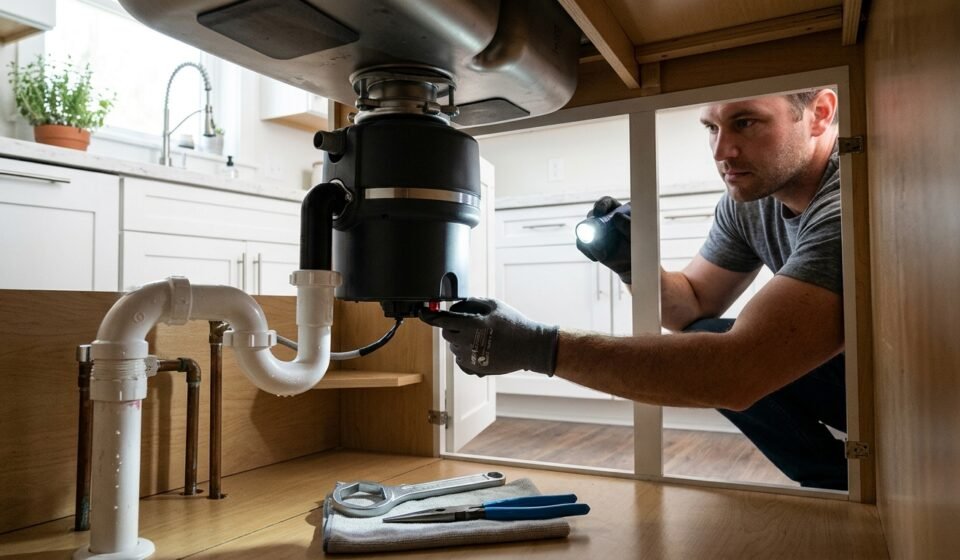

A kitchen sink can become frustrating very quickly when the disposal suddenly stops working. One moment it is grinding food normally, and the next you get silence, a humming sound, standing water, or a motor that starts and then quits. The good news is that many disposal problems are related to simple issues such as a tripped overload protector, loss of power, or a jam.
Before doing anything under the sink, however, safety should come first. A garbage disposal contains moving components that can cause serious injuries. Manufacturer guidance from InSinkErator and Moen specifically warns against placing your hand into the disposal, even when you believe the power is off.
This guide explains the most common reasons a garbage disposal not working situation occurs, what the different symptoms mean, and which troubleshooting steps are appropriate for each problem.
Start by Identifying the Symptom
The sound or behavior of the disposal can tell you a lot about what may be wrong.
If there is no sound at all, start with the electrical supply, wall switch, outlet, circuit breaker, and reset or overload protector. InSinkErator specifically recommends checking whether the unit is connected to an outlet or hardwired and then checking the breaker, switch, and reset system.
If the disposal hums but does not spin, the motor may be receiving power while the grinding mechanism is unable to move. A jammed turntable, impeller, or foreign object is a common possibility. Both Home Depot and InSinkErator describe a jammed grinding mechanism as a common explanation for this symptom.
If the disposal stops suddenly after running, overheating or the overload protector may have shut the unit down. Modern disposals are designed to stop automatically when an overload or similar problem occurs.
If the unit runs but water does not drain, you may be dealing with a plumbing clog rather than a motor problem. InSinkErator recommends distinguishing between a disposal that is not running and one that runs but cannot drain properly.
Check the Power Supply First
When a disposal makes absolutely no sound, do not immediately assume the motor has failed.
Start by checking whether the power cord is still firmly connected to the outlet if your model uses a plug. Items stored under a sink can sometimes interfere with the cord or connection. Home improvement guidance from Bob Vila and Lowe’s both recommend checking the plug as one of the first troubleshooting steps.
Next, check the circuit breaker. A garbage disposal can share an electrical circuit with other kitchen equipment, depending on the home’s wiring and applicable electrical requirements. If the circuit has overloaded, the breaker may have tripped.
For a disposal connected to an outlet, InSinkErator suggests testing that outlet with another small electrical device. If the test device does not receive power, the issue may be with the outlet or electrical circuit rather than the disposal itself.
Do not open electrical boxes or attempt unfamiliar wiring repairs. A persistent electrical problem is a reason to use a qualified electrician.
Press the Reset or Overload Button
Many garbage disposals include an overload protector that automatically shuts the unit down under certain conditions.
InSinkErator describes its overload protector as a red square button located on the bottom of many units. When it trips, the button may appear slightly pushed out. The manufacturer advises switching the disposal off and allowing it to cool before attempting a reset. On some models, the cooling period can be up to about 20 minutes.
The exact button location and design can vary by manufacturer and model, so check your owner’s manual when possible.
A basic sequence is:
Turn the disposal switch off. Disconnect power when the manufacturer’s instructions call for it. Allow the unit to cool if it has overheated. Locate and press the reset or overload button. Then restore power and test the disposal while following the manufacturer’s operating instructions.
If the button immediately pops out again, do not repeatedly force it. A recurring trip can indicate a jam, overload, or another mechanical or electrical problem.
What to Do When the Disposal Hums
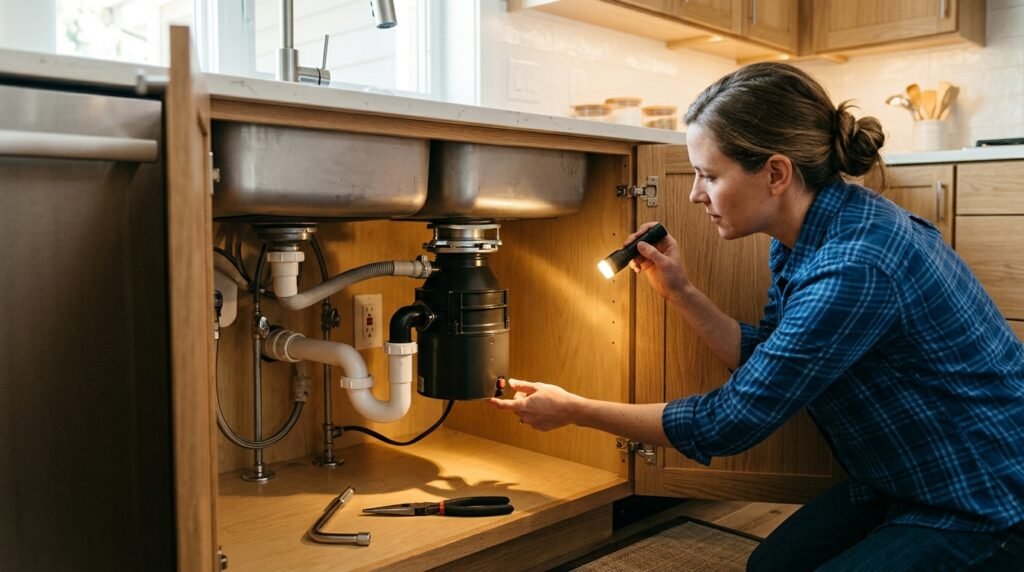
A humming disposal deserves special attention because the motor may be energized while the grinding mechanism is stuck.
The likely issue is an obstruction preventing the turntable, flywheel, or impellers from rotating normally. Hard objects, food waste, bones, or other unsuitable materials can become lodged in the grinding chamber. Moen notes that inappropriate materials can become stuck around internal components, while InSinkErator provides specific instructions for freeing a jammed unit.
First, disconnect the power completely. Unplug the unit if it uses a cord, or turn off the appropriate circuit breaker if it is hardwired.
Never put your hand into the disposal.
Many compatible units have a hole underneath the housing where a disposer wrench or 1/4-inch Allen wrench can be inserted. InSinkErator recommends moving the wrench back and forth to free a stuck mechanism. Once the mechanism can rotate freely, visible objects can be removed with tongs or pliers rather than your hands.
Do not assume every garbage disposal has exactly the same design. Some models use different mechanisms or procedures, so consult the manual for your specific unit before forcing anything.
Remove a Foreign Object Safely
Small objects occasionally find their way into a disposal. Pieces of metal, glass, utensils, bones, or other hard materials can create unusual noises or prevent the grinding mechanism from moving.
InSinkErator recommends using a flashlight to inspect the grinding chamber and using tongs or pliers to remove accessible objects. It specifically states that hands should never be placed inside the disposal.
If the object cannot be safely reached or the grinding mechanism will not move after following the manufacturer’s recommended procedure, stop rather than taking unnecessary risks.
A disposal that produces a loud metallic, rattling, or vibrating sound may have a foreign object inside, a stuck impeller, or an installation-related issue.
If the Disposal Runs but Does Not Drain
Sometimes the disposal itself is functioning correctly, but the sink remains full of water.
In this situation, the problem may be a clogged drain line rather than a failed disposal. InSinkErator recommends checking whether the disposal is running normally and whether water forms a whirlpool. When the motor runs but the sink does not drain correctly, the drain line may need attention.
For a typical disposal clog, a plunger can sometimes help. With a double sink, the other drain opening should be blocked so pressure is directed toward the affected side. InSinkErator’s published instructions describe filling the sink with a limited amount of water and using a plunger with controlled plunging action to help free the clog.
Avoid pouring harsh drain chemicals into a disposal unless the appliance manufacturer specifically approves the product. Mechanical methods and proper maintenance are generally preferable.
What About a Garbage Disposal That Leaks?
A leak does not necessarily mean the motor has failed.
Water can escape from several areas, including the mounting assembly, discharge connection, dishwasher inlet, or the bottom of the disposal. InSinkErator recommends identifying the exact source before deciding what repair is necessary.
A discharge leak may involve a loose connection, damaged gasket, or cracked elbow. A leak at the dishwasher inlet has its own troubleshooting procedure. Water that genuinely originates from the bottom or through the disposal’s body may indicate a more serious problem requiring manufacturer or professional assistance.
Because electricity and water are involved, disconnect power before inspecting the area around the disposal.
Common Reasons a Disposal Stops Working
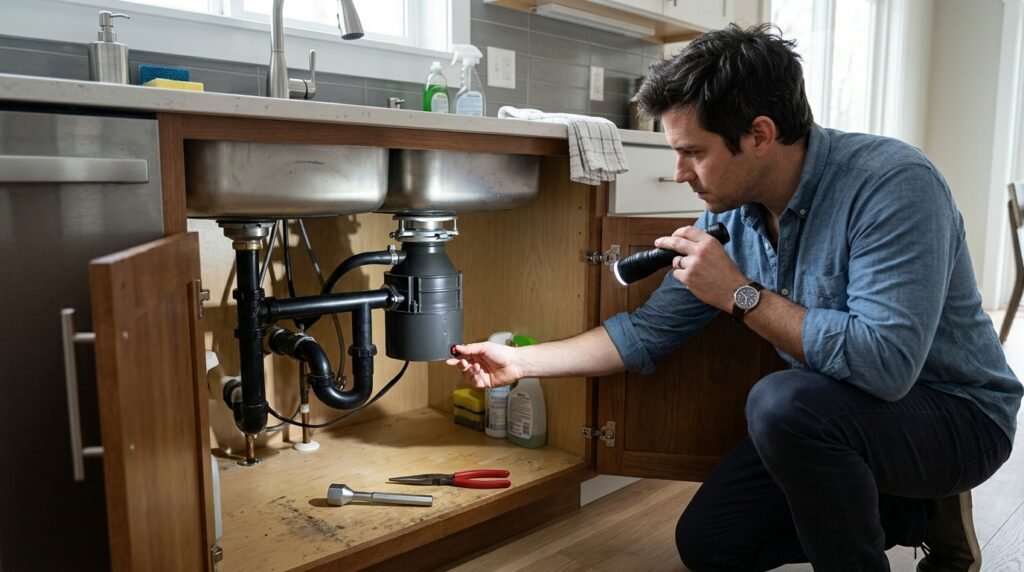
Several problems appear repeatedly in manufacturer and repair guidance.
An overload or overheating event can trip the disposal’s internal protection. Too much food waste or an obstruction can place additional stress on the motor.
A jammed grinding mechanism can prevent the motor from turning. A humming sound is one of the clearest clues that the motor may be powered but unable to rotate the grinding components.
A power or switch problem can make a perfectly functional disposal appear completely dead. Checking the outlet, breaker, switch, and appropriate reset system can help separate an electrical issue from an appliance failure.
A drain blockage can also create the impression that the disposal is broken when the motor itself still works normally.
Finally, a failed motor or damaged housing may require repair or complete replacement. Repair guidance from Home Depot and other sources notes that a defective motor or seriously damaged disposal may not be practical to repair at the component level.
When You Should Stop Troubleshooting
Basic troubleshooting is reasonable when the problem involves an accessible reset button, a simple power connection, or a manufacturer-approved method for clearing a minor jam.
There are situations where continuing to experiment is not a good idea.
Stop and seek professional help when the circuit breaker repeatedly trips, the disposal has burning or electrical odors, wiring appears damaged, the housing is cracked, water is leaking from the bottom of the unit, or the disposal remains inoperative after the manufacturer’s troubleshooting steps. InSinkErator and Moen both direct users toward further service when their recommended procedures do not resolve the problem.
A professional is also appropriate when you are uncomfortable working around electrical connections or cannot safely determine how your particular model is powered.
How to Prevent Future Disposal Problems
Good operating habits can reduce unnecessary strain.
Run the disposal with a moderate flow of cold water while grinding food and continue running the water briefly afterward. InSinkErator recommends this approach for normal operation.
Avoid putting grease, oil, or fat into the disposal or drain. These materials can contribute to plumbing problems.
Be careful with hard and fibrous materials. Moen explains that unsuitable materials can become lodged around internal components, while Bob Vila notes that items such as bones, certain shells, seeds, and fibrous food scraps can create problems depending on the disposal.
Do not overload the unit with a large amount of food at once. Feeding waste gradually gives the disposal a better chance to process it without unnecessary strain.
Frequently Asked Questions
Why is my garbage disposal not working but the sink has power?
The disposal may have a tripped overload protector, a failed switch, a jammed mechanism, or an internal fault. Check the unit’s reset system and follow the manufacturer’s troubleshooting procedure before assuming that the motor has failed.
Why does my garbage disposal hum but not grind?
A humming sound commonly points to a jammed grinding mechanism. Disconnect power before attempting to clear the obstruction, and use the manufacturer’s recommended wrench or other approved method rather than reaching inside with your hand.
How long should I wait before resetting a garbage disposal?
The required cooling time depends on the model. InSinkErator says some units may need to cool for up to about 20 minutes before being restarted, while its general troubleshooting instructions also indicate waiting when the reset button will not stay engaged.
What if the reset button does not fix the problem?
Move to the next diagnostic step based on the symptom. Check power and the electrical circuit if the disposal is silent; investigate a jam if it hums; and examine the drain if the unit runs but water does not leave the sink. Persistent failures should be evaluated by a qualified professional or the manufacturer.
Can I put my hand inside the garbage disposal if it is unplugged?
No. Manufacturers specifically warn against placing your hand inside the disposal. Use a flashlight for inspection and tools such as tongs or pliers for accessible objects.
Conclusion
When a disposal suddenly stops, the problem is often easier to diagnose once you pay attention to what the unit is actually doing. A completely silent disposal points toward power, switch, breaker, or overload protection. A humming disposal suggests that the motor may be receiving power while the grinding mechanism is jammed. A running disposal with standing water may have a clogged drain rather than a failed appliance.
Start with the safest and simplest checks, follow the instructions for your particular model, and disconnect power before working near the grinding mechanism. Never put your hand inside the unit. When troubleshooting does not solve the problem, repeated electrical trips, serious leaks, unusual burning smells, or suspected motor failure are good reasons to stop DIY repairs and contact a qualified professional.