

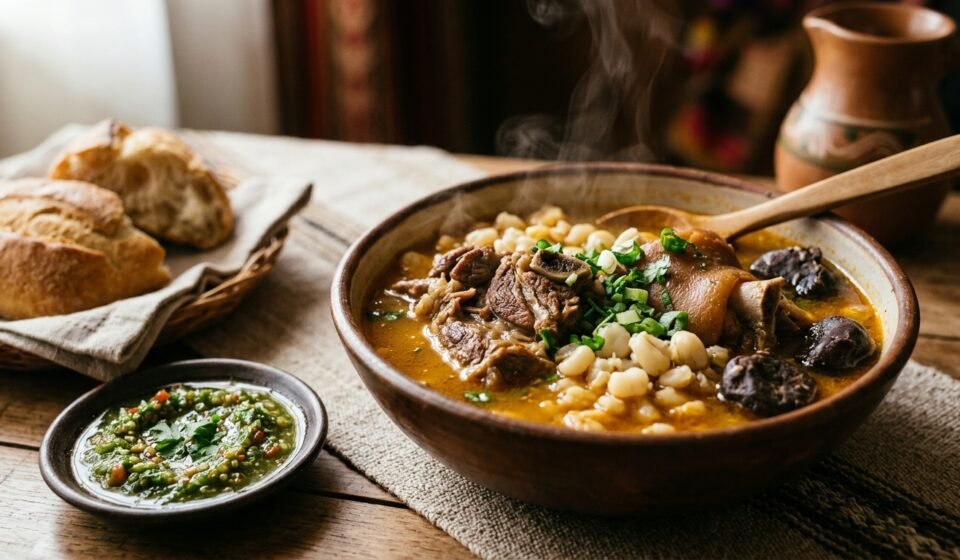

When people search for best fricase boliviano near me, they are usually not looking for just any soup or pork stew. They want a genuinely Bolivian dish with tender pork, a flavorful chile-based broth, traditional accompaniments, and the comforting character associated with fricasé paceño.
The challenge is that fricase boliviano is still a relatively specialized dish outside Bolivia. A restaurant may serve Latin American food without serving fricasé at all, while another Bolivian restaurant may offer it only on particular days or during certain meal periods. Current online menus show that the dish is available in some Bolivian restaurants in places such as Northern Virginia and London, but availability, pricing, and serving times can change.
That makes the search more useful when you know what to look for. Rather than choosing the nearest restaurant simply because it has a high rating, you can identify the places most likely to serve a traditional and satisfying version.
What Is Fricase Boliviano?
Fricase boliviano is a traditional Bolivian dish strongly associated with La Paz and the Andean highlands. It is generally prepared with pork and served in a seasoned broth with mote, or white hominy corn, and chuño, a traditional dried potato product. Bolivian tourism material describes fricasé de cerdo as a pork dish accompanied by white corn and chuño and seasoned with chile.
Traditional recipes show that the preparation can include pork ribs or other pork cuts, onion, garlic, cumin, oregano, pepper, chile, broth, chuño, and cooked white mote. Some recipes also use bread crumbs to thicken the broth slightly and serve the finished dish with llajua, a spicy green chile sauce.
One important detail is that recipes are not completely identical. Different cooks and regions can use somewhat different chile preparations and proportions. That means authenticity should not be judged by one ingredient alone. The overall combination of pork, broth, Andean ingredients, seasoning, and traditional accompaniments matters more.
Why Fricasé Is Closely Linked to La Paz
Fricase has a particularly strong connection to La Paz. The city’s culinary traditions treat the dish as an important part of paceño food culture, and the municipal government declared fricasé part of the city’s cultural heritage in 2014.
The dish has also become popular beyond La Paz and throughout Bolivia. It is often associated with early meals, weekends, celebrations, and the familiar Bolivian tradition of eating hearty food after a late night. Bolivian media describe fricasé as a comforting dish that is particularly prominent in La Paz and is sometimes enjoyed after celebrations or nights of little sleep.
Its history is interesting as well. Bolivian tourism sources connect the name and culinary concept to the French fricassé, while emphasizing that the Bolivian dish became a distinctly local adaptation using ingredients and cooking traditions associated with Bolivia.
What Authentic Fricase Should Look and Taste Like
A good bowl of fricase should feel substantial rather than watery. The pork should be tender and flavorful, while the broth should have enough seasoning to complement the meat rather than simply tasting like plain stock.
Mote gives the dish a pleasant, chewy texture, while chuño contributes a very different texture and absorbs some of the surrounding flavor. Traditional recipes also demonstrate that the dish is cooked slowly, with one documented preparation simmering the pork and chuño for at least two hours or until the meat becomes tender.
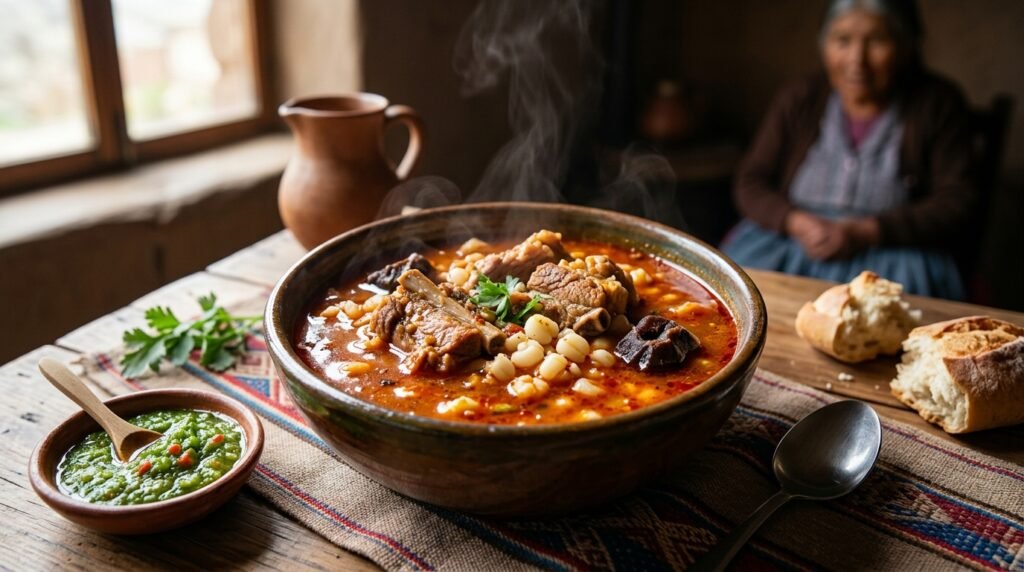
The appearance can vary depending on the recipe. A chile-based broth may range from golden to deeper reddish tones, so color alone is not a perfect authenticity test. What matters more is whether the flavor, texture, and ingredients work together as a recognizable Bolivian fricasé.
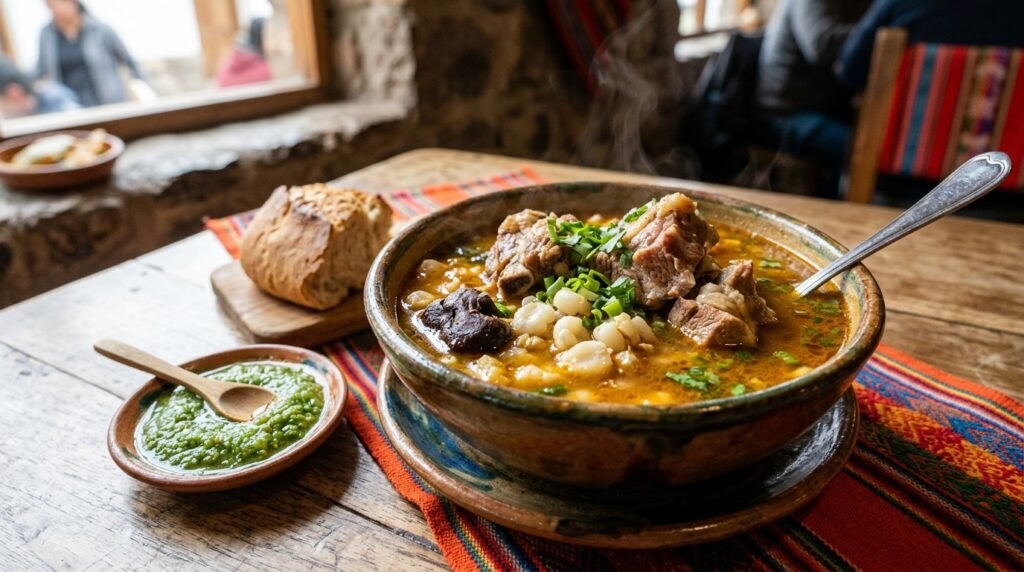
Look for visible pieces of pork, mote, and traditional potato products rather than a generic soup containing random vegetables or rice. A menu description that clearly identifies the ingredients is also more informative than one that simply calls the dish “pork soup.”
How to Find the Best Fricase Boliviano Near You
The most effective way to find fricasé is to begin with Bolivian restaurants rather than searching only for “Latin food.”
On Google Maps, try searches such as “Bolivian restaurant near me,” “fricase boliviano near me,” “fricasé paceño near me,” or “Bolivian pork stew near me.” Google explains that its local Maps results are influenced primarily by relevance, distance, and prominence, which means the first result is not automatically the closest or best restaurant for your specific dish.
You can also narrow the search by adding your city or neighborhood. Google Maps specifically supports searches using a city and state or other location terms, and its listings can provide useful information such as business hours, phone numbers, ratings, and reviews.
The next step is to check the actual menu. Search for “fricase,” “fricasé,” “fricasé paceño,” or “fricase de cerdo.” Some establishments may not put the dish prominently on their home page even when it is available on a menu or as a special.
Check Whether Fricase Is Served Every Day
This is one of the easiest ways to avoid a wasted trip.
Some restaurants may prepare fricase as a daily dish, while others may feature it only on weekends, during breakfast hours, or as a special. Current online listings demonstrate why checking first matters: some Bolivian restaurants publicly list fricase on their menus, but their service hours differ significantly by location.
Before driving across town, check the restaurant’s latest menu or call directly. Ask one simple question: “Do you have fricase today?”
That can save you from arriving after the dish has sold out or discovering that it is only served on a particular day.
How to Judge a Restaurant From Its Menu
A restaurant that specializes in Bolivian food is usually a better starting point than a generic restaurant offering a broad mix of Latin cuisines.
Look at the rest of the menu. A stronger sign of Bolivian specialization is the presence of several recognizable Bolivian dishes rather than one isolated item. Menus currently available online show fricasé appearing alongside dishes such as salteñas, sopa de maní, pique macho, chicharrón, and other regional specialties.
A detailed menu description can also tell you a lot. When a restaurant specifically mentions pork, mote, chuño, or other traditional components, it gives the customer a clearer idea of what is being served.
That does not guarantee perfection, but it is a more useful signal than simply seeing the word “Bolivian” in a restaurant’s name.
Read Reviews for Food Details, Not Just Star Ratings
Star ratings are helpful, but they cannot tell you whether the fricase itself is good.
Instead, read recent reviews and search within them for descriptions of the actual dish. Reviews that mention tender pork, rich broth, authentic Bolivian flavors, generous portions, or properly prepared traditional ingredients are far more useful than comments that only say the restaurant was “nice.”
For example, older Tripadvisor reviews for one Bolivian restaurant in the Washington-area market specifically praised its fricase and described the food as authentic, showing how dish-specific feedback can be more informative than a general score.
Recent reviews are particularly valuable because restaurants change menus, chefs, hours, and recipes over time.
What Should Come With Fricase?
Traditional accompaniments are part of what makes the experience distinctive.
Cooked white mote is one of the most recognizable components. Chuño is also central to many traditional versions. Some preparations are served with llajua, a spicy Bolivian salsa, while bread can be used alongside the soup. A traditional recipe from Bolivia’s food culture specifically includes white mote and llajua when serving fricasé.
Marraqueta is another food strongly associated with La Paz and is culturally linked with fricasé in Bolivian culinary traditions. Bolivian reporting has described fricasé and marraqueta as important symbols of La Paz gastronomy.
Because restaurants outside Bolivia may adapt their menus to local ingredients, you may not always receive every traditional accompaniment. The absence of one side does not automatically mean the entire dish is inauthentic.
Best Times to Order Fricasé
If you are specifically hunting for traditional fricase, consider checking breakfast and lunch menus before looking for dinner.
In Bolivian food culture, fricasé is particularly associated with morning and daytime eating, especially on weekends and after celebrations. That tradition is one reason a restaurant that only serves it early in the day can actually be a promising sign rather than an inconvenience.
This also explains why someone searching in the evening may find fewer options than expected. A restaurant can be excellent at making fricasé but simply not serve it at night.
What If There Is No Bolivian Restaurant Near You?
Sometimes the answer to a “near me” search is that there is no convenient option.
In that situation, expand your search rather than giving up. Try “Bolivian restaurant,” “comida boliviana,” “Andean restaurant,” or the name of the dish without the word “near me.” Searching your city alongside the dish can uncover restaurants that do not rank for the exact phrase but still have fricasé on their menu.
Latin American markets and smaller family-run food businesses can also be worth checking. Some traditional dishes are promoted through social media or word of mouth rather than through large restaurant websites.
Another option is to look for current delivery listings. Online delivery menus have confirmed fricase availability at some Bolivian restaurants in the United States and United Kingdom, although menus and prices can change.
Can You Make Fricase Boliviano at Home?
Yes. Traditional recipes show that fricasé is based on straightforward ingredients, although some of them may require a specialty grocery store.
A documented Bolivian recipe uses pork, onion, garlic, cumin, oregano, chile, broth, chuño, and white mote, with the pork simmered until tender. The recipe also notes that bread crumbs can be used to thicken the broth and that llajua can be served with the finished dish.
The biggest challenge at home is sourcing authentic ingredients and allowing enough time for the pork to become properly tender. Replacing traditional ingredients is possible, but the result may taste more like a personal adaptation than classic fricasé paceño.
How to Choose the Right Fricase for Your Taste
Not everyone wants the exact same level of spice or richness.
When ordering, ask whether the broth is mild, medium, or spicy if the restaurant offers different options. You can also ask which pork cut is used and whether the dish includes both mote and chuño.
For a first tasting, a traditional preparation with the classic accompaniments gives you the clearest idea of what Bolivian fricasé is supposed to be. Once you know the original style, you can better appreciate regional or restaurant-specific variations.
Final Thoughts on Finding the Best Fricase Boliviano Near Me
Finding the best fricase boliviano near me is less about choosing the closest restaurant and more about identifying a place that understands the dish.
Start with dedicated Bolivian restaurants, check the current menu, confirm that fricase is being served that day, and read recent reviews that discuss the food itself. Pay attention to traditional ingredients such as pork, mote, and chuño, and remember that recipes can vary without losing their Bolivian identity.
The most rewarding bowl is likely to be the one prepared with care rather than simply added to a menu for variety. Once you understand the dish, your local search becomes much easier, and you can recognize a promising fricasé before you even take the first bite.



Comments are closed.
[…] Best Fricase Boliviano Near Me: How to Find Authentic Bolivian Fricasé […]
[…] Best Fricase Boliviano Near Me: How to Find Authentic Bolivian Fricasé […]