

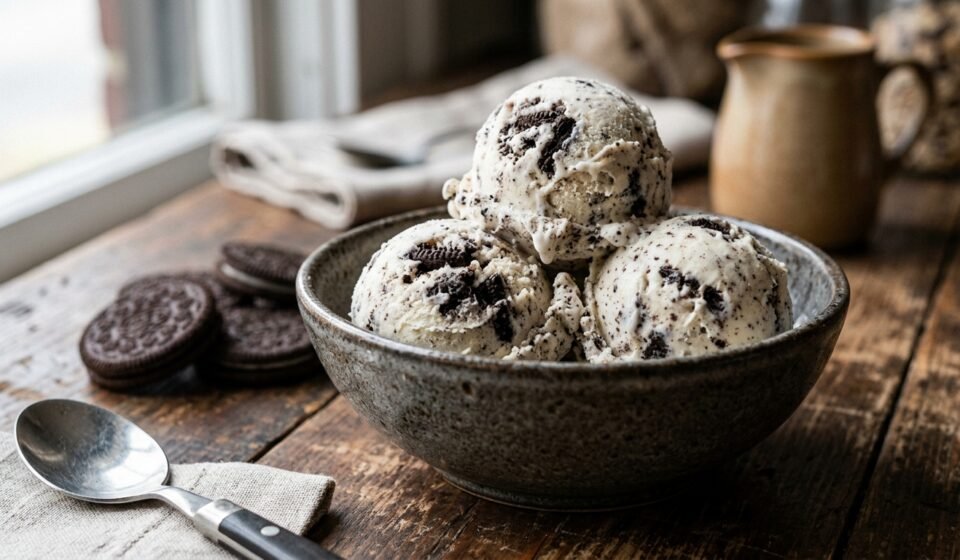

Few frozen desserts combine familiar flavors as effectively as cookies and cream ice cream. A smooth vanilla or cream-based ice cream is packed with pieces of dark chocolate sandwich cookies, creating a contrast between cold creaminess and crisp, crumbly texture. It is simple enough to feel familiar but versatile enough to appear in cones, milkshakes, ice cream cakes, sandwiches, and other desserts.
The flavor is also more interesting historically than its straightforward recipe suggests. Several people and companies have claimed a role in creating or popularizing it, with competing stories dating from the late 1970s into the early 1980s. South Dakota State University, Blue Bell Creameries, ice cream consultant Malcolm Stogo, and Dreyer’s/Edy’s have all been connected to different versions of the origin story.
Today, cookies and cream is firmly established as a mainstream ice cream flavor. The International Dairy Foods Association’s 2024 survey of American flavor preferences placed it sixth among the country’s top 10 favorite ice cream flavors.
What Is Cookies and Cream Ice Cream?
At its core, cookies and cream ice cream consists of a creamy frozen base combined with pieces of chocolate sandwich cookies. Vanilla is the most familiar base, although commercial and homemade versions can vary in sweetness, richness, cookie size, and overall texture.
The contrast is a major part of the appeal. The ice cream brings a soft, cool, creamy sensation, while the cookies introduce darker chocolate notes and a crunch that changes as the pieces absorb moisture from the surrounding ice cream.
A well-made version therefore needs more than simply mixing cookies into frozen dairy. The base needs enough vanilla and cream flavor to complement the cookies without overwhelming them. At the same time, the cookie pieces should remain noticeable rather than turning completely soft or disappearing into crumbs.
Bon Appétit’s 2024 supermarket taste test highlighted three qualities that helped distinguish stronger versions: a creamy rather than icy texture, a noticeable vanilla foundation, and substantial cookie pieces. Its editors also found meaningful differences among brands in cookie size, sweetness, texture, and richness.
The Fascinating History Behind the Flavor
The exact origin of cookies and cream is not settled, which makes its history unusually complicated for such a familiar dessert.
South Dakota State University has one of the clearest institutional claims. Its official ice cream history states that in 1979, dairy plant manager Shirley Seas and dairy science students Joe Leedom and Joe Van Treeck developed what was initially called Oreo ice cream before it became known as cookies ‘n cream.
There are other claims, however. Ice cream consultant Malcolm Stogo has said he created the flavor in the mid-to-late 1970s. Blue Bell has claimed an early role in mass-producing the flavor, while John Harrison, a longtime Dreyer’s/Edy’s ice cream taster, was associated with a later claim that he created it for the company.
Because these accounts overlap and refer to different forms of invention, introduction, and mass production, there is no universally accepted single inventor. The simplest explanation is that the idea may have emerged independently in several places around the same period.
That ambiguity is important. Saying that one person definitively invented the flavor oversimplifies a history in which several credible claims exist.
How Oreo Became Connected to Cookies and Cream
The flavor’s history is closely connected to chocolate sandwich cookies, particularly Oreo.
Mondelēz International says Oreo was first introduced in the United States in 1912. The company describes the original product as two chocolate-flavored wafers surrounding a crème filling.
That combination eventually became an obvious partner for vanilla ice cream. The dark cookie provides a deeper chocolate taste and visual contrast, while the sweet cream filling works naturally with the vanilla base.
It is worth remembering, though, that “cookies and cream” is a flavor category rather than a requirement to use one specific cookie brand. Homemade recipes and commercial products can use different chocolate sandwich cookies or chocolate wafers. Food Network’s homemade version, for example, uses chocolate wafer cookies, while other recipes specifically use sandwich cookies.
This distinction also helps explain why cookies and cream ice cream can taste surprisingly different from one brand or recipe to another.
What Ingredients Make the Best Version?
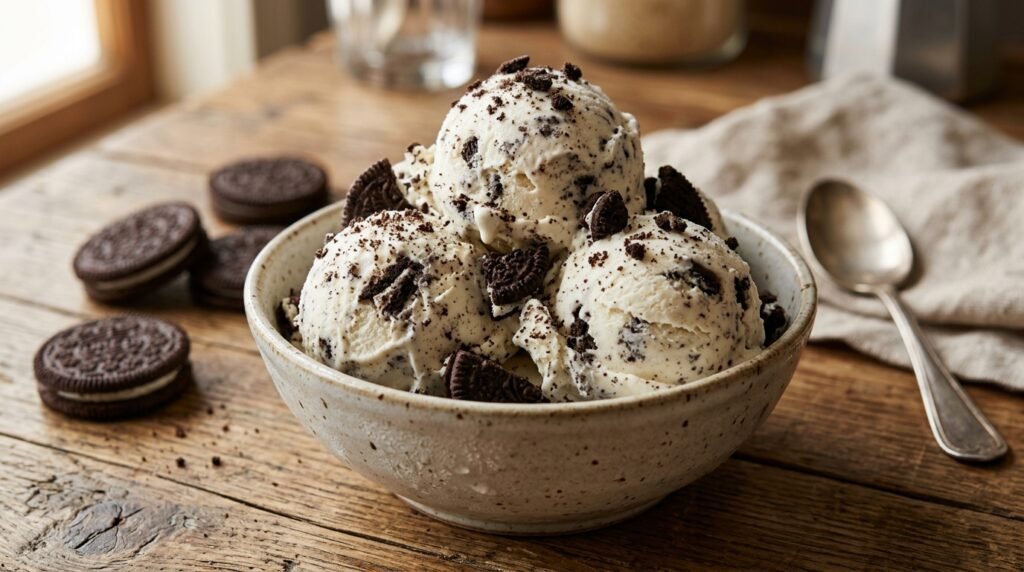
A traditional homemade recipe does not require an enormous ingredient list. Milk, heavy cream, sugar, vanilla, and chocolate cookies can create the basic flavor profile.
King Arthur Baking’s version uses whole milk, heavy cream, sugar, vanilla, and 15 to 20 chocolate sandwich cookies. Its method incorporates the cookie pieces after the ice cream has been churned, allowing the pieces to remain distinct rather than becoming completely blended into the base.
Other recipes take a custard approach. Food Network’s version combines heavy cream and whole milk with sugar, vanilla, salt, and egg yolks before chilling and churning the mixture. Chocolate wafer cookies are incorporated after the ice cream is frozen to a soft stage.
These approaches show an important principle: the final result depends not only on the ingredients but also on when and how the cookies are added.
For a more pronounced cookie experience, larger chunks can create a stronger bite. Smaller crumbs distribute chocolate flavor more evenly throughout the ice cream. A combination of both can provide the best balance, giving some spoonfuls a gentle cookie flavor and others a more obvious crunch.
Why the Flavor Works So Well
Cookies and cream succeeds because it combines several sensory contrasts in a single dessert.
The first is temperature and texture. Ice cream is soft and creamy once it reaches serving temperature, while cookie pieces offer resistance and crunch. That contrast keeps the dessert from feeling one-dimensional.
The second is flavor. Vanilla has a relatively gentle aromatic profile, allowing the cocoa-rich cookie components to stand out. The sweetness of the cream filling also reinforces the sweetness of the ice cream base.
The third is visual appeal. White or pale ice cream covered with dark cookie fragments immediately communicates what the dessert tastes like. That makes the flavor recognizable before the first bite.
There is also a strong nostalgic element. IDFA’s research identifies “nostalgic and comforting” as one of the broader trends influencing ice cream development, alongside indulgence, convenience, plant-based products, clean labeling, and wellness-oriented options.
How to Make Cookies and Cream Ice Cream at Home
Making a homemade version is more approachable than many people expect.
For a churned recipe, begin with a cold dairy base made from milk, cream, sugar, and vanilla. Some recipes use egg yolks to create a custard-style foundation, while simpler versions omit eggs. The mixture should be thoroughly chilled before going into the ice cream maker.
The cookies should be crushed into a mixture of sizes rather than pulverized into an extremely fine powder. Larger pieces create texture, while smaller fragments spread their flavor through the base.
The timing matters. Instead of allowing the cookies to churn for a long period from the beginning, many recipes add them toward the end of the freezing process or fold them into the soft ice cream afterward. This helps preserve their identity as cookie pieces.
Once mixed, the ice cream can be transferred to a covered container and frozen until firm. Before serving, letting it sit at room temperature for a short period makes scooping easier.
For people who do not own an ice cream maker, no-churn methods can also work, although the texture may differ from traditional churned ice cream. The basic goal remains the same: create a creamy frozen base and distribute cookie pieces evenly without losing their texture.
How to Get Better Cookie Texture
One of the biggest differences between average and excellent cookies and cream ice cream is the condition of the cookie pieces.
Very fine crumbs can make the entire ice cream taste chocolatey, but they do not provide much crunch. Extremely large pieces can deliver impressive bites but may make each spoonful inconsistent.
A useful middle ground is to crush most of the cookies into medium chunks while reserving a smaller amount for larger pieces. Those larger pieces can be folded in near the end of churning or scattered between layers when transferring the ice cream to a freezer container.
Moisture is another consideration. Cookies naturally soften when surrounded by ice cream. That is not necessarily a flaw; some people prefer slightly softened cookie pieces because they become cake-like and blend into the creamy base. Others prefer a stronger crunch.
The best texture ultimately depends on personal preference, but deliberate variation in cookie size gives you more control.
Cookies and Cream Is More Than a Scoop
The flavor’s popularity has helped it move beyond ordinary cones and bowls.
Cookies and cream can be used in ice cream cakes, sandwiches, bars, milkshakes, muffins, and layered desserts. Food Network, for example, has recipes for cookies and cream ice cream cakes, bars, and muffins, demonstrating how easily the flavor translates into other formats.
This flexibility is one reason the flavor continues to work so well. The combination already contains a creamy component, a cookie component, sweetness, and chocolate character, so it can serve as a foundation for more elaborate desserts without requiring many additional flavors.
It can also be paired with chocolate sauce, caramel, brownies, chocolate cake, or extra sandwich cookies. The key is balance. Adding too many sweet components at once can overwhelm the relatively simple vanilla-and-cookie foundation.
Is Cookies and Cream Still Popular?
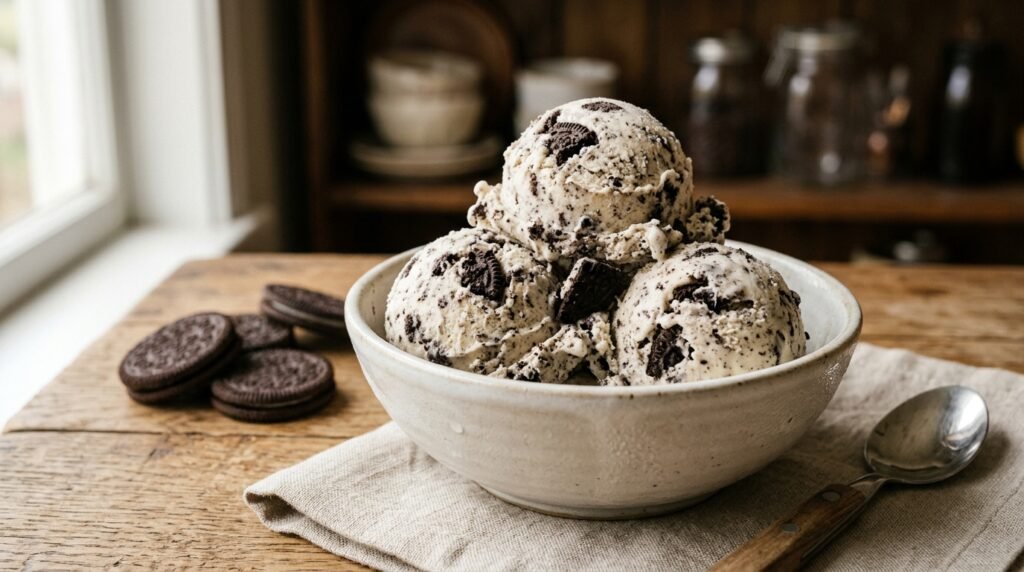
Yes. Its continued presence among the leading American ice cream flavors shows that it has moved well beyond the novelty stage.
IDFA’s 2024 flavor survey placed cookies and cream sixth in its top 10, behind vanilla, chocolate, strawberry, butter pecan, and cookie dough, but ahead of mint chocolate chip, chocolate chip, rocky road, and peanut butter/PB cup.
Bon Appétit’s supermarket taste test also described the flavor as a major modern favorite and noted that cookies and cream had become especially prominent in search interest and sales trends.
Its staying power is understandable. Unlike highly specialized flavors, cookies and cream combines ingredients most consumers already recognize. It feels familiar enough to be comforting while still offering the texture and chocolate contrast people expect from a more indulgent dessert.
Frequently Asked Questions
Does cookies and cream ice cream always use Oreo cookies?
No. Oreo is strongly associated with the flavor, but cookies and cream ice cream can be made with many chocolate sandwich cookies or chocolate wafer cookies. The defining idea is the combination of creamy ice cream and chocolate cookie pieces, not necessarily one particular brand.
Who invented cookies and cream ice cream?
There is no universally accepted answer. South Dakota State University credits Shirley Seas and students Joe Leedom and Joe Van Treeck with developing Oreo ice cream in 1979, while other claims have been associated with Malcolm Stogo, Blue Bell, and Dreyer’s/Edy’s.
What flavor is the ice cream base?
Vanilla is the most common and recognizable base because it provides a mild backdrop for the chocolate cookies. Recipes can vary, but the basic combination is usually a creamy vanilla-style ice cream with chocolate cookie pieces.
Why do cookies become soft in ice cream?
Cookies absorb moisture from their surroundings over time. Because ice cream contains water and remains in contact with the cookie pieces during storage, the cookies gradually lose some of their original crispness.
Can I make cookies and cream ice cream without an ice cream maker?
Yes. No-churn techniques can produce a homemade version, although the texture can differ from ice cream made with a traditional churning process. Churning helps create the characteristic smooth texture by incorporating and managing air as the mixture freezes.