



Leslie Preer became known to the wider public because of a murder case that remained unanswered for more than two decades. In May 2001, the Maryland wife and mother was found dead inside her Chevy Chase home after she failed to appear for work. Investigators recovered crucial DNA evidence, but for years they could not determine whose DNA it was.
The case eventually took an extraordinary turn. A new generation of detectives revisited the evidence using forensic genetic genealogy, a technique that can connect an unidentified DNA profile to distant relatives and family lines. That work eventually directed investigators toward Eugene Teodor Gligor, a man who had previously dated Leslie’s daughter, Lauren. A discarded water bottle later provided the direct DNA comparison investigators needed.
Gligor was arrested in 2024, pleaded guilty to second-degree murder in May 2025, and was sentenced in August 2025 to 30 years in prison, with all but 22 years suspended, followed by five years of supervised probation.
The story is therefore no longer an unsolved mystery. It is a case about a family waiting for answers, an investigation that changed direction over time, and the growing role of advanced DNA methods in cold-case investigations.
Who Was Leslie Preer?
Leslie Jennings Preer was a wife and mother who lived with her husband, Carl “Sandy” Preer, in Chevy Chase, Maryland. Their daughter, Lauren, was an important part of the family’s life and remained deeply affected by her mother’s death.
Sources that later examined Leslie’s background describe her as having grown up in a military family and spending part of her youth in Pensacola, Florida. She attended Pensacola High School and later studied at the University of Florida. A 2002 Washington Post memorial confirms her full name as Leslie Jennings Preer and records the dates associated with her life, while later case reporting identifies her husband as Sandy and her daughter as Lauren.
There is some inconsistency among later online sources concerning Leslie’s birth year, with different databases giving 1951 or 1952. The Montgomery County State’s Attorney’s Office’s 2025 case summary described her as 49 when she died, so that is the age most appropriate to use when discussing the official case record.
Leslie was working for Specialties Inc., an advertising production company in Washington, D.C. On an ordinary Wednesday morning in 2001, her failure to report for work became the event that exposed the tragedy inside her home.
What Happened to Leslie Preer in 2001?
On May 2, 2001, Leslie did not arrive at work as expected. Because the absence was unusual, her employer became concerned and contacted her family. Her husband and others went to the couple’s home on Drummond Avenue in Chevy Chase.
Police were dispatched to the residence at approximately 11:47 a.m. After entering the home, investigators discovered a crime scene and Leslie’s body. Her death was ruled a homicide.
Investigators documented signs of a struggle and collected biological evidence from the residence. DNA associated with an unknown male was recovered, including evidence beneath Leslie’s fingernails. That evidence became one of the most important elements of the case because it indicated investigators had biological material belonging to the person they were trying to identify.
Yet having DNA and knowing whose DNA it belonged to were two very different things.
Why Did the Leslie Preer Case Go Cold?
In the early investigation, detectives interviewed family members, friends, coworkers and other people who might have had a connection to Leslie. Some men associated with the case provided DNA samples, but those samples did not match the unknown profile. The unidentified DNA was also entered into law-enforcement systems, but no useful match appeared.
Attention at one point focused heavily on Leslie’s husband, Sandy Preer. He faced suspicion during the investigation, a development that placed an additional burden on a family already dealing with a devastating loss. Later DNA work excluded him from the unknown male profile. Sandy died in 2017, years before investigators identified the actual killer.
The case remained unsolved for approximately 23 years.
One of the notable details in the later investigation is that Eugene Gligor’s name had actually appeared in an old tip. According to reporting on the case, a tip had been submitted in 2002 raising concerns about Gligor, who had previously dated Lauren Preer. Investigators did not have the DNA evidence needed at that time to connect him to the crime.
That detail became extremely important decades later.
How Genetic Genealogy Changed the Investigation

The breakthrough began when Montgomery County’s cold-case detectives revisited the evidence in 2022. Detectives Tara Augustin and Alyson Dupouy worked on the case and pursued forensic genetic genealogy to learn more about the unknown male profile.
Forensic genetic genealogy differs from a traditional DNA database search. Instead of requiring investigators to find an exact match to a known suspect, the technique can reveal genetic relationships to distant relatives. Investigators can then build family trees, identify geographic connections and narrow a large group of possible people down to a much smaller set.
In Leslie’s case, the analysis produced connections that led investigators to a family line associated with Romania and eventually to the surname Gligor. The detectives then compared that information with old case records. That was when they rediscovered the earlier tip concerning Eugene Gligor.
The combination of modern genetic science and old-fashioned case-file review was the critical turning point.
The Dulles Airport Water Bottle Breakthrough
Finding Gligor’s name was not enough. Investigators still needed to compare his DNA directly with the biological evidence collected from Leslie’s crime scene.
Police therefore monitored him and arranged an operation at Washington Dulles International Airport. Investigators watched as Gligor drank from a plastic water bottle and discarded it. Officers recovered the bottle and submitted it for DNA testing.
The result was decisive. The DNA from the discarded bottle matched the DNA connected to the crime scene, including the profile recovered beneath Leslie’s fingernails.
Authorities then moved to arrest Gligor. A warrant was obtained, and he was arrested in Washington, D.C., on June 18, 2024, by a U.S. Marshals task force. He was initially charged with first-degree murder.
This was the moment a 23-year-old cold case effectively became an active prosecution.
Who Killed Leslie Preer?
The person convicted in connection with Leslie Preer’s death was Eugene Teodor Gligor, who had previously dated Leslie’s daughter, Lauren.
At the time of his arrest, police described Gligor as someone known to the Preer family. The fact that the eventual suspect had once been within the family’s social circle added another layer to a case that had already remained unresolved for years. Lauren said publicly that she had never believed someone she knew could have been responsible for her mother’s death.
The original first-degree murder charge did not remain the final charge. In May 2025, Gligor pleaded guilty to second-degree murder. Prosecutors and his attorneys reached a plea agreement that avoided a full trial and the possibility of a life sentence that had been associated with the original first-degree count.
What Was the Outcome of the Case?
On August 28, 2025, Montgomery County Circuit Court Judge David Lease sentenced Gligor to 30 years in prison, with all but 22 years suspended. He was also given five years of supervised probation after his release.
That ruling formally brought the long-running criminal case to a close.
The guilty plea also established an important distinction between earlier allegations and the final legal outcome. Gligor was initially accused of first-degree murder, but he ultimately pleaded guilty to second-degree murder. For readers researching the case today, that distinction matters because older articles may still describe him using the original charge.
What Happened to Leslie Preer’s Husband?
Carl “Sandy” Preer was one of the people deeply affected by both the murder and the investigation that followed. Because investigators initially considered him as a suspect, suspicion surrounding Leslie’s husband became part of the case’s early history.
Later DNA evidence excluded him, and the eventual identification of Gligor cleared Sandy of responsibility for Leslie’s murder. However, Sandy died in 2017 and therefore did not live to see the case solved. ABC News specifically noted that the investigation’s outcome had a profound effect on Lauren and that her father had died years before the breakthrough.
This is one of the most tragic aspects of the story: the answer came, but not soon enough for everyone who had spent years waiting for it.
Why the Leslie Preer Case Matters
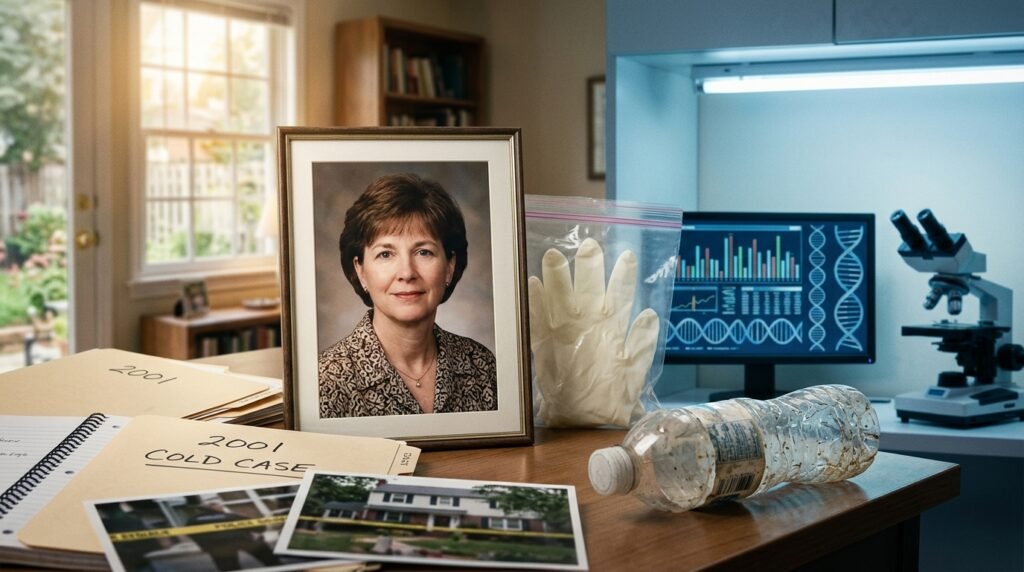
The Leslie Preer case illustrates how cold-case investigations can change when old evidence is examined with newer technology.
In 2001, investigators had DNA but no name. In 2022, genetic genealogy gave them a path toward a family connection. In 2024, a discarded water bottle produced the direct DNA comparison necessary for an arrest. In 2025, a guilty plea and sentence brought the prosecution to an end.
The case also demonstrates why old investigative records can remain valuable even after decades. The 2002 tip concerning Gligor had existed long before the final breakthrough. It became meaningful only after newer genetic evidence pointed investigators toward the same family name.
ABC News later featured the investigation in a September 2025 episode of 20/20 titled “First Comes Love, Then Comes Murder,” bringing renewed national attention to the case and the work of the detectives who revisited it.
Frequently Asked Questions About Leslie Preer
Who was Leslie Preer?
Leslie Jennings Preer was a married mother who lived in Chevy Chase, Maryland. She worked for Specialties Inc. in Washington, D.C., and was killed inside her home on May 2, 2001.
How long was Leslie Preer’s murder unsolved?
The case remained unsolved for about 23 years before police identified and arrested Eugene Gligor in June 2024.
How was the case solved?
Investigators used forensic genetic genealogy to identify possible family connections from crime-scene DNA. They then linked those findings to an old tip about Eugene Gligor and obtained a direct DNA sample from a discarded water bottle at Dulles International Airport.
Did Eugene Gligor plead guilty?
Yes. He pleaded guilty to second-degree murder on May 7, 2025.
How long was Eugene Gligor sentenced to prison?
He received a 30-year sentence, with all but 22 years suspended, plus five years of supervised probation after release.
Final Thoughts on Leslie Preer
For years, Leslie Preer’s name was tied to an unanswered question: who was responsible for her death? The investigation finally produced an answer through a combination of preserved evidence, renewed detective work, genetic genealogy and a carefully obtained DNA sample.
Her story is remembered not simply because the murder was eventually solved, but because of what the 23-year wait meant for her family. Modern forensic methods supplied a breakthrough that earlier investigators could not achieve, while old records supplied a clue that had been waiting in the file for decades.
Today, the Leslie Preer case stands as a powerful example of why cold cases are sometimes worth reopening. Evidence can remain silent for years, yet new technology can give it a voice.