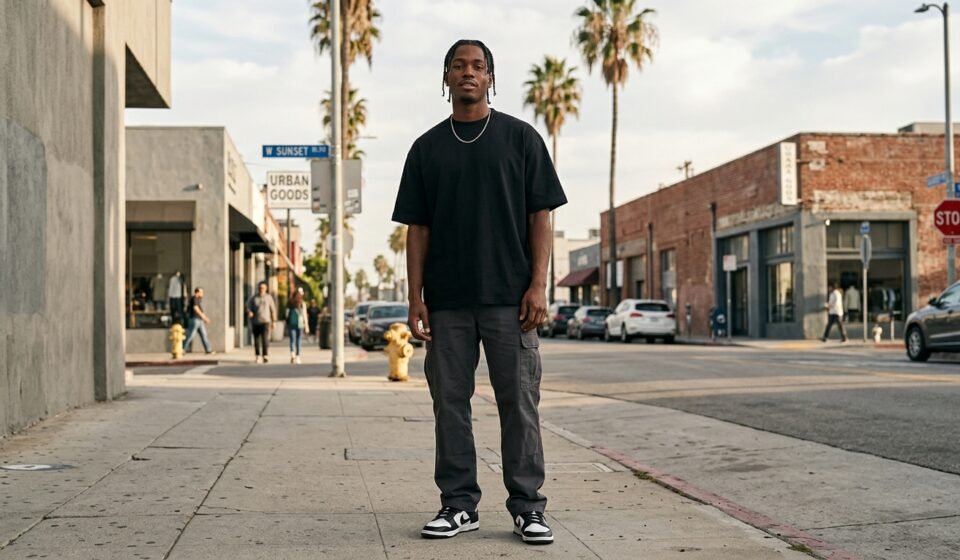

When a T-shirt feels noticeably heavier, holds its shape, and creates the boxy silhouette associated with classic streetwear, there is a good chance the blank garment itself is part of the appeal. shaka wear has built much of its reputation around exactly that idea. What began in the Los Angeles streetwear world has grown into a broader apparel brand offering heavyweight T-shirts, fleece, denim, workwear, outerwear, and other everyday pieces.
Today, the brand is particularly recognized for its Max Heavyweight collection. Its flagship short-sleeve T-shirt is listed at 7.5 ounces and 245–255 GSM, while the garment-dyed version is listed at 255–260 GSM. Those specifications help explain why Shaka Wear appears so often in conversations about substantial, oversized streetwear basics.
But there is more to Shaka Wear than a thick T-shirt. Its history, expanding product range, different fits, and role in blank apparel make the brand worth a closer look.
What Is Shaka Wear?
Shaka Wear is an LA-created streetwear brand focused on foundational clothing and urban style. The company describes its approach as being built around individuality, self-expression, and streetwear essentials rather than constantly changing fashion trends. Its current website presents the brand as both a consumer apparel label and a source of wholesale blanks.
That dual identity is important. For everyday shoppers, Shaka Wear offers finished garments designed around recognizable streetwear silhouettes. For clothing entrepreneurs, printers, and decorators, the brand is also known for blank garments that can be customized with screen printing, embroidery, DTF transfers, and other decoration methods. Wholesale distributors currently list Shaka Wear across T-shirts, fleece, outerwear, bottoms, and other categories.
The result is a brand that sits between basic apparel and streetwear. Its clothes are simple enough to function as everyday essentials, but the weight, proportions, and construction give them a more distinctive visual presence.
The History Behind the Brand
Shaka Wear traces its origins to the early 2000s. In a 2024 article celebrating its 20th anniversary, the company said the milestone marked two decades since the brand’s beginnings. A 2024 trademark record connected to Gino Corp. shows the SHAKA WEAR trademark application was filed on September 13, 2004, while the brand’s first recorded use in commerce was in September 2005 and the registration was issued in March 2006.
That timeline makes 2004 an important reference point for the brand’s origins. Shaka Wear says it grew from a desire to create durable clothing influenced by the energy of urban street culture. Over time, its focus expanded beyond T-shirts into hoodies, accessories, fleece, denim, workwear, and other categories.
The company’s current positioning still reflects those roots. Its mission emphasizes authenticity, respect, loyalty, and trust within street culture, while its product strategy continues to revolve around timeless silhouettes and practical essentials.
Why the Max Heavyweight T-Shirt Matters
The Max Heavyweight T-shirt is arguably the product most closely associated with Shaka Wear. The brand describes it as a classic boxy silhouette influenced by 1990s streetwear. Its current short-sleeve model uses 100% USA cotton in most colorways, a 16-singles yarn count, a 7.5-ounce weight, and a 3% Lycra rib collar.
The weight makes a major difference in how the shirt looks and feels. Lightweight tees tend to fall closer to the body, while a heavyweight garment can create more structure through the torso, shoulders, sleeves, and collar. That structure is central to the oversized streetwear aesthetic Shaka Wear is known for.
The standard Max Heavyweight short sleeve is described as slightly oversized through the chest and length, with somewhat larger sleeves. The brand currently offers an extensive size range, including standard sizes through 7XL and several tall options.
This broad sizing is one reason the shirt appeals to different types of wearers. Someone looking for a relaxed everyday fit can stay with their normal size, while someone seeking a more exaggerated silhouette can approach sizing differently depending on the specific model.
Shaka Wear Is More Than T-Shirts
Although heavyweight tees remain the center of attention, the current Shaka Wear lineup is considerably broader than it once was.
The Core Collection includes the 7.5oz Max Heavyweight Short Sleeve, Max Heavyweight Garment Dye, Cropped Tee, Garment Dye Drop Shoulder, and Oversized Tee. The same collection also features heavyweight fleece hoodies and sweatpants, as well as Los Angeles garment-dyed bottoms.
The broader catalog goes further. Shaka Wear’s wholesale store lists long sleeves, tanks, polos, work shirts, denim, joggers, basketball shorts, fleece cargo pants, jackets, bombers, varsity jackets, thermal pieces, women’s clothing, kids’ apparel, socks, beanies, and other accessories.
This expansion matters because it shows that Shaka Wear is no longer simply a heavyweight T-shirt company. Its current strategy is closer to building a complete streetwear wardrobe around the same emphasis on substantial fabrics and relaxed proportions.
At the time of research in October 2026, the official Core Collection listed the standard 7.5oz Max Heavyweight Short Sleeve at $12.90, the Oversized Tee at $13.90, the Garment Dye version at $16.90, and the Garment Dye Drop Shoulder at $15.90. Prices can change, so these figures are best treated as a current snapshot rather than permanent pricing.
Understanding the Different Fits
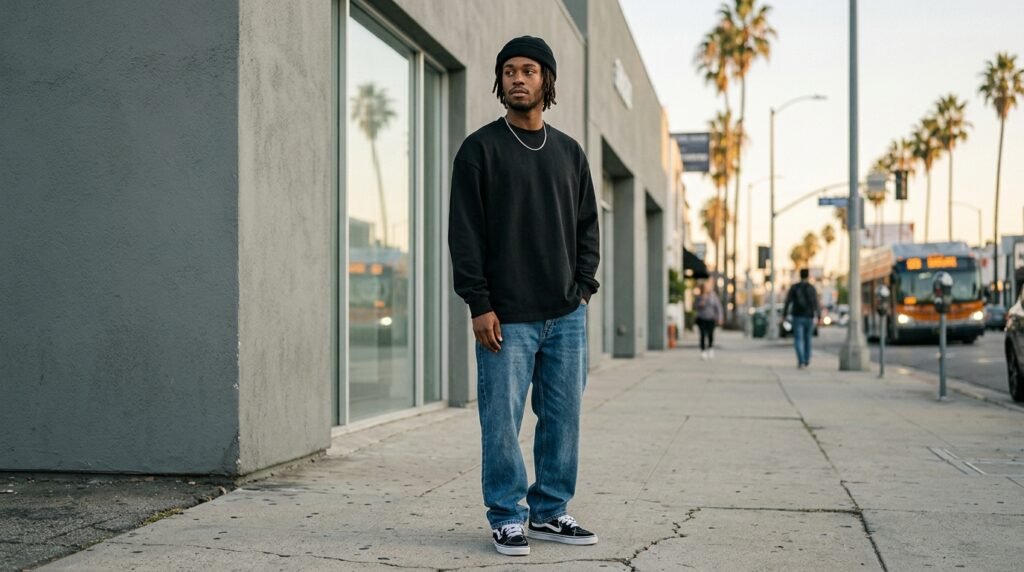
One of the easiest mistakes with Shaka Wear is assuming every heavyweight shirt fits the same way.
The standard Max Heavyweight Short Sleeve is slightly oversized and can be worn in the normal size for a regular fit. The Oversized Tee goes further, with oversized shoulders and sleeves, and the brand recommends sizing down for a more conventional fit.
The Garment Dye Drop Shoulder is different again. It has oversized shoulders and width but a shorter length, creating a more deliberately boxy shape. Shaka Wear says the normal size produces a boxy fit on this model.
The Cropped Tee takes another approach by keeping the heavyweight construction while reducing the length to approximately waist level. The brand says it retains the durability and heavyweight USA cotton associated with the classic Max Heavyweight design.
Community discussions reinforce the importance of checking the exact model instead of relying on the brand name alone. Users frequently describe Shaka Wear shirts as running large, long, or particularly oversized, although individual experiences vary by cut and release.
For that reason, checking the individual size chart is more reliable than simply ordering your usual size.
Does Shaka Wear Shrink?
This question requires a more nuanced answer than a simple yes or no.
The current Shaka Wear Oversized Tee product page explicitly states that the shirt will shrink to a shorter length after washing.
However, the brand does not treat every garment identically. Its Garment Dye Drop Shoulder, for example, is described as receiving a shrink-free wash, while the garment-dyed Max Heavyweight is marketed as having a washed vintage finish.
That difference is an important buying detail. A person shopping for Shaka Wear should look at the specifications of the exact shirt rather than assume that the entire lineup has identical shrink behavior.
This is also where measurements become more useful than labels. When an oversized shirt is designed to have substantial width and a shorter post-wash length, a small change after laundering can affect the final silhouette noticeably.
Is Shaka Wear Good Quality?
There is a strong case for calling Shaka Wear a good value within the heavyweight streetwear category, particularly for shoppers who specifically want thick fabric and an oversized silhouette.
The standard Max Heavyweight tee uses a dense 7.5-ounce construction, and the current product information specifies 245–255 GSM and 100% USA cotton for the core short-sleeve version, with some color-specific fabric blends.
Shaka Wear also says it tracks production from raw cotton through spinning, knitting, dyeing, washing, cutting, sewing, and final assembly. That is a company statement about its production approach, rather than independent proof that every garment will outperform every competitor, but it does show how strongly the brand positions durability and construction as core selling points.
Independent community feedback is more mixed, which is useful context. A detailed 2025 comparison of heavyweight tees praised the Max Heavyweight for its substantial fabric and value but criticized aspects of workmanship and noted that the shirt is not pre-shrunk. Other users have praised the fabric while reporting that the fit can be extremely oversized.
The fairest conclusion is that Shaka Wear’s strongest selling point is not luxury finishing. It is the combination of heavy fabric, streetwear proportions, recognizable silhouettes, and relatively accessible pricing.
Why Creators and Print Shops Use Shaka Wear Blanks
Shaka Wear’s blank-apparel identity is another major part of its story.
Wholesale suppliers currently market the brand to businesses looking for garments suitable for screen printing, embroidery, DTF, and heat-transfer customization. Industry-focused brand guides also describe the Max Heavyweight collection as a go-to option when a project calls for thick, boxy streetwear blanks.
A heavyweight tee can be especially useful for graphic streetwear because its substantial fabric creates a sturdy base for a large printed design. It also helps produce the structured silhouette associated with modern merch and independent clothing labels.
The practical consideration is that decorators still need to evaluate the exact fabric blend and color. For example, the current standard Max Heavyweight page lists Heather Grey as 90% USA cotton and 10% polyester, while Charcoal Grey is 50% USA cotton and 50% polyester.
That distinction can matter during printing, especially when a design process depends on the behavior of different fibers.
What Makes Shaka Wear Different From Ordinary Basics?
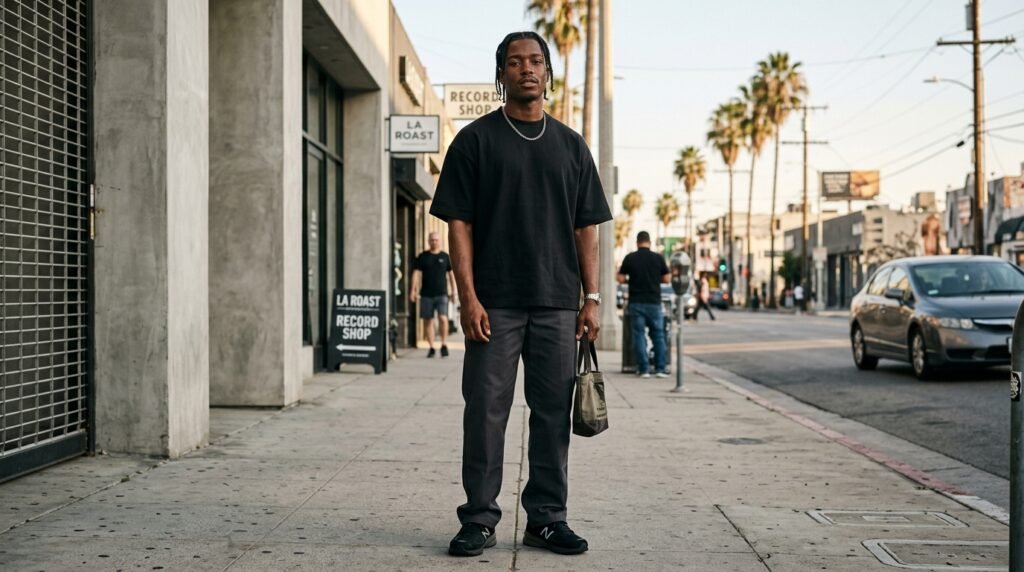
The biggest difference is often felt rather than seen.
A conventional basic T-shirt is usually designed around versatility, lightness, and a relatively neutral fit. Shaka Wear’s most famous pieces approach the T-shirt differently. The fabric has more weight, the silhouette is wider, and details such as the collar and shoulder construction are designed to support a streetwear look.
That makes Shaka Wear particularly appealing to people who like 1990s-inspired streetwear, loose jeans, sneakers, layered outfits, and oversized proportions.
It also explains why the brand can feel either excellent or excessive depending on personal preference. Someone looking for a trim, lightweight T-shirt may find a Max Heavyweight shirt too bulky. Someone who wants structure and presence may consider exactly those characteristics its biggest advantage.
Frequently Asked Questions
What is Shaka Wear known for?
Shaka Wear is best known for heavyweight streetwear essentials, particularly its 7.5oz Max Heavyweight T-shirts. The brand has since expanded into fleece, denim, workwear, outerwear, accessories, and other apparel.
Is Shaka Wear an LA brand?
Shaka Wear describes itself as LA-created streetwear, and its history and branding are closely connected to Los Angeles streetwear culture. Trademark records also place its early corporate address in Los Angeles before a later address change to Houston.
Are Shaka Wear shirts oversized?
Many of the brand’s best-known shirts are intentionally oversized or slightly oversized. The exact fit varies significantly between the standard, oversized, cropped, garment-dyed, and drop-shoulder models.
What is the Shaka Wear Max Heavyweight T-shirt made from?
The standard 7.5oz Max Heavyweight Short Sleeve is listed as 100% USA cotton with a 3% Lycra rib collar. Heather Grey and Charcoal Grey are listed as cotton-polyester blends.
Does the Max Heavyweight shrink?
The standard Oversized Tee page warns that the garment will shrink to a shorter length after washing, while some garment-dyed styles use different washing treatments. Always check the specifications for the exact model.
Is Shaka Wear suitable for custom clothing brands?
Yes. The brand has a substantial blank-apparel presence, and wholesale suppliers market its garments for screen printing, embroidery, DTF, and heat-transfer applications.
Final Thoughts on Shaka Wear
Shaka Wear has succeeded by doing something deceptively simple: taking everyday streetwear basics and making fabric weight, structure, and silhouette central to the product.
Its roots date back to the early 2000s, but the brand remains relevant because its core designs align closely with the continuing popularity of heavyweight and oversized clothing. The Max Heavyweight line remains its defining product family, while the broader catalog now covers much more of a complete streetwear wardrobe.
The most important thing for shoppers is understanding that Shaka Wear is not one single fit. Standard, oversized, garment-dyed, cropped, and drop-shoulder pieces can behave differently, particularly after washing. For custom apparel creators, meanwhile, the brand’s heavyweight blanks offer a practical foundation for designs that need a substantial streetwear feel.
In the end, Shaka Wear’s appeal comes down to a clear formula: heavyweight materials, relaxed proportions, accessible essentials, and a strong connection to Los Angeles streetwear culture.



Comments are closed.
[…] Shaka Wear: The LA Streetwear Brand Known for Heavyweight Essentials […]
[…] Shaka Wear: The LA Streetwear Brand Known for Heavyweight Essentials […]